my role: UX, concept development, information visualization
This project took place in 2016, while I was studying Digital Concept Development at KEA, and had Amager Resource Center (ARC) as a client. The solution was created for the ARC visitors center.
ARC desired for the visitors center, in the new powerplant an engaging, education and memorable experience.
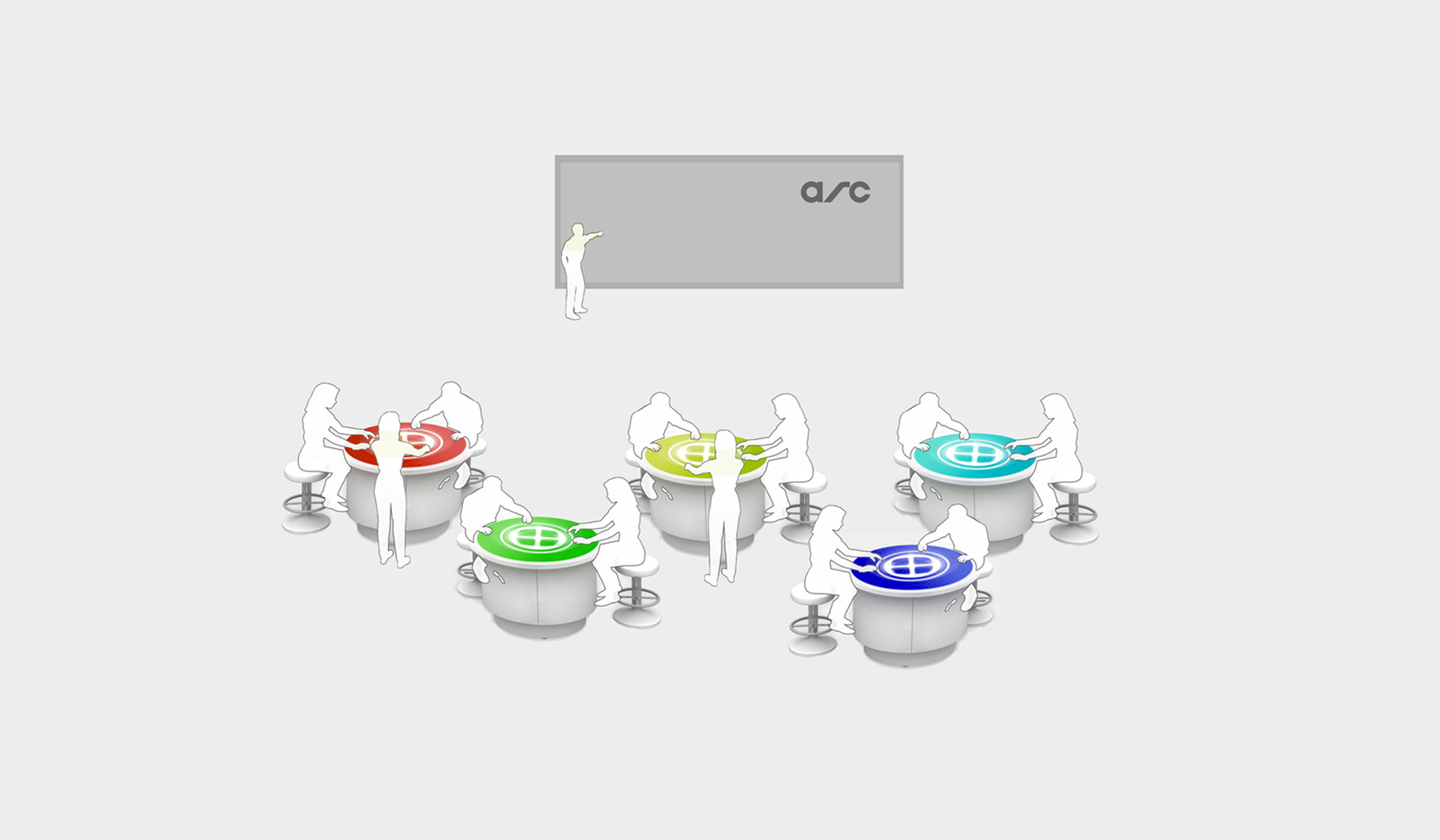
The solution was the prototype of an interactive touch touch-based table which encompassed all the elements required to make a visit at the ARC visitor center interactive, engaging, educational and memorable.
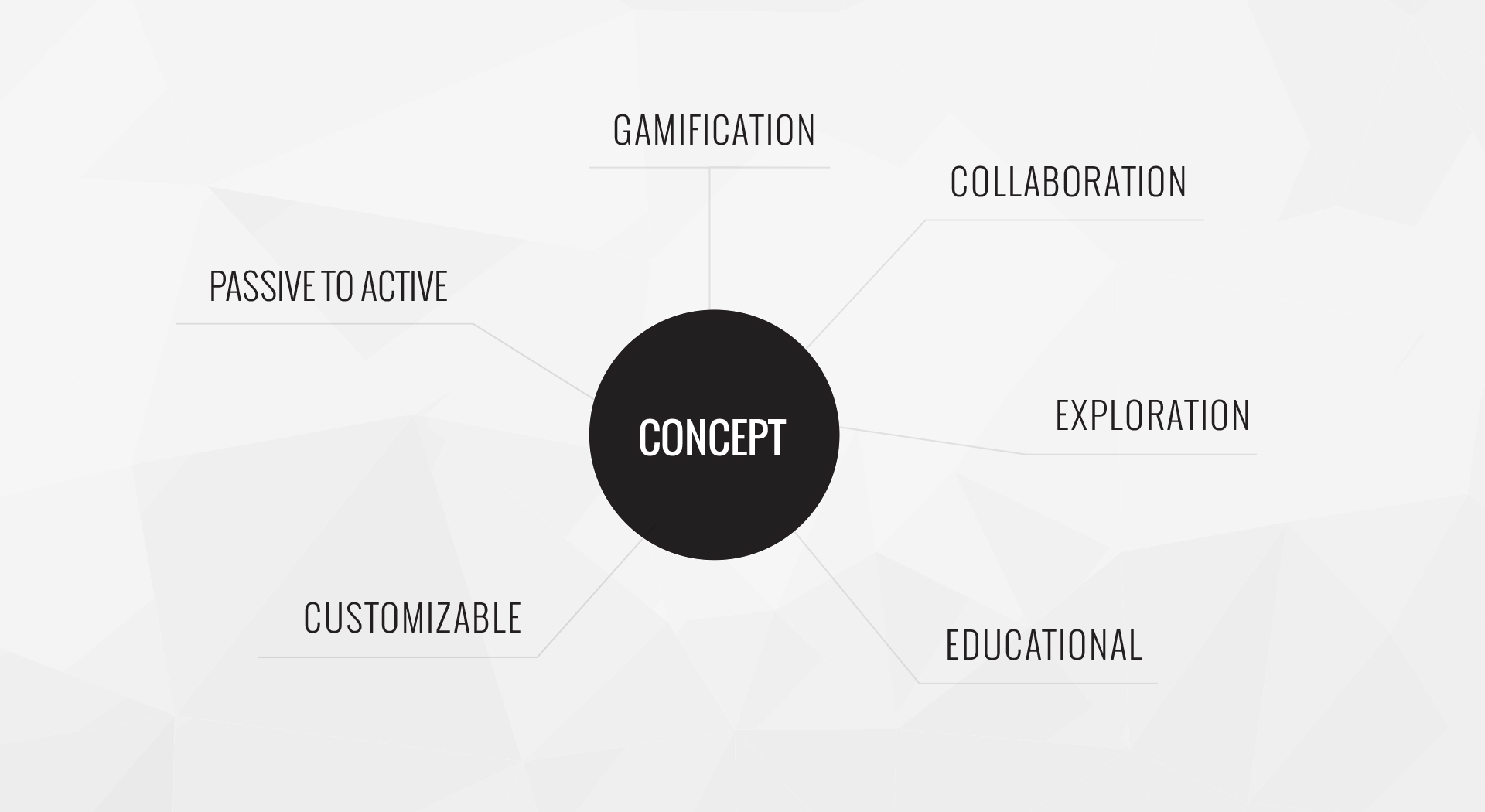
A round table shape was used in order to facilitate and enable team work. Scalablility for accessibility, adaptability for different group sizes and flexibility, which allows quick creation of a myriad of different experiences, enable gamification and foster exploration. These were the key selling points.
ARC is a waste disposal plant owned by 5 Copenhagen Municipalities. The primary operations revolve around waste management including collecting, sorting and recycling. ARC is unique in that it turns the waste it receives into energy, which is distributed back to Copenhagen.
Simultaneously ARC runs a Visitor Center that provides educational experiences for a variety of target groups and it is focused on the environmental aspects of waste. At the time at which the project took place, the visitor center was planned to be moved into the current Amager Bakke/Copenslope plant designed by Architect Bjarke Ingels and used the collaboration with KEA to spring new ideas early on.
To fully appreciate and understand the problem, the team of six - me along with five other colleagues from KEA - went two times to visit the power plant. ARC offers educations tours in which students get information about the operations that take place inside the power plant and other topics related to waste, recycling and water management. We took part in one tour and observed.

All the ideas gathered formed a sum up of key points for each visit and offered an overview when looking for patterns, themes and commonality between attractions.
From the Insights gathered and analyzed, it was concluded that interactivity is an essential component if an educational experience is to become memorable. With this in mind, the concept is focused on the visitor's perspective and their entire experience - including reflection upon their visit.
A user journey has been envisioned and mapped out, in order to define both the tangible and digital elements for the students. Trying to map out what activities or events could take place before and after the visit to the plant was essential for the overall journey.


The main focus is to create a more immersive experience at the new visitor centre. From the research carried out, it was concluded that this is the place where visitors spend the most time and where most of the improvements could be accomplished. User experiences, both for digital and analogue solutions, were investigated and carefully analysed, discussed, evaluated and held against both the client goal and user engagement possibilites.
To fully appreciate and understand the problem, the team of six - me along with five other colleagues from KEA - went two times to visit the power plant. ARC offers educations tours in which students get information about the operations that take place inside the power plant and other topics related to waste, recycling and water management. We took part in one tour and observed.
A prototype was created to test the idea thoroughly, get the look and feel, and visualise the possibilities of the concept.
The prototype consisted of having a projector mounted to the ceiling, projecting an animated presentation from above over a round table where test persons could gather around. The different games and information were displayed and presented to the client as an interactive presentation in which the client was able to participate and have a direct view upon the concept and functionality.